


Welcome to the fourteenth issue of The Weekly Landing.
If you’re joining us for the first time, welcome. Each week we’ll spend time exploring timeless wisdom from Scripture, Christian theology, history, philosophy, and the great works that have shaped Christian civilization and the American story.
The goal is simple: to help people think deeply, live faithfully, and preserve the inheritance of biblical truth for the next generation.
This week’s passages bring together a common theme found in Scripture, the American founding, and the lives of those who came before us: What are we willing to endure and sacrifice today so that those who come after us may inherit something worth preserving? From Paul’s call to persevere in doing good, to Joseph’s faithfulness in hardship, to Thomas Paine’s appeal for perseverance during the Revolution, we are reminded that what is valuable is rarely preserved without sacrifice—and that our responsibilities do not end with our own generation.
✝️ Scripture This Week
Galatians 6:9
9 And let us not be weary in well doing: for in due season we shall reap, if we faint not.
Romans 5:3-5
3 Not only so, but we also glory in our sufferings, because we know that suffering produces perseverance; 4 perseverance, character; and character, hope. 5 And hope does not put us to shame, because God’s love has been poured out into our hearts through the Holy Spirit, who has been given to us.
Hebrews 12:1-11
1 Therefore, since we are surrounded by such a great cloud of witnesses, let us throw off everything that hinders and the sin that so easily entangles. And let us run with perseverance the race marked out for us, 2 fixing our eyes on Jesus, the pioneer and perfecter of faith. For the joy set before him he endured the cross, scorning its shame, and sat down at the right hand of the throne of God. 3 Consider him who endured such opposition from sinners, so that you will not grow weary and lose heart. 4 In your struggle against sin, you have not yet resisted to the point of shedding your blood. 5 And have you completely forgotten this word of encouragement that addresses you as a father addresses his son? It says,
“My son, do not make light of the Lord’s discipline,
and do not lose heart when he rebukes you,
6 because the Lord disciplines the one he loves,
and he chastens everyone he accepts as his son.”
7 Endure hardship as discipline; God is treating you as his children. For what children are not disciplined by their father? 8 If you are not disciplined—and everyone undergoes discipline—then you are not legitimate, not true sons and daughters at all. 9 Moreover, we have all had human fathers who disciplined us and we respected them for it. How much more should we submit to the Father of spirits and live! 10 They disciplined us for a little while as they thought best; but God disciplines us for our good, in order that we may share in his holiness. 11 No discipline seems pleasant at the time, but painful. Later on, however, it produces a harvest of righteousness and peace for those who have been trained by it. 1
📜 Historical Anecdote This Week
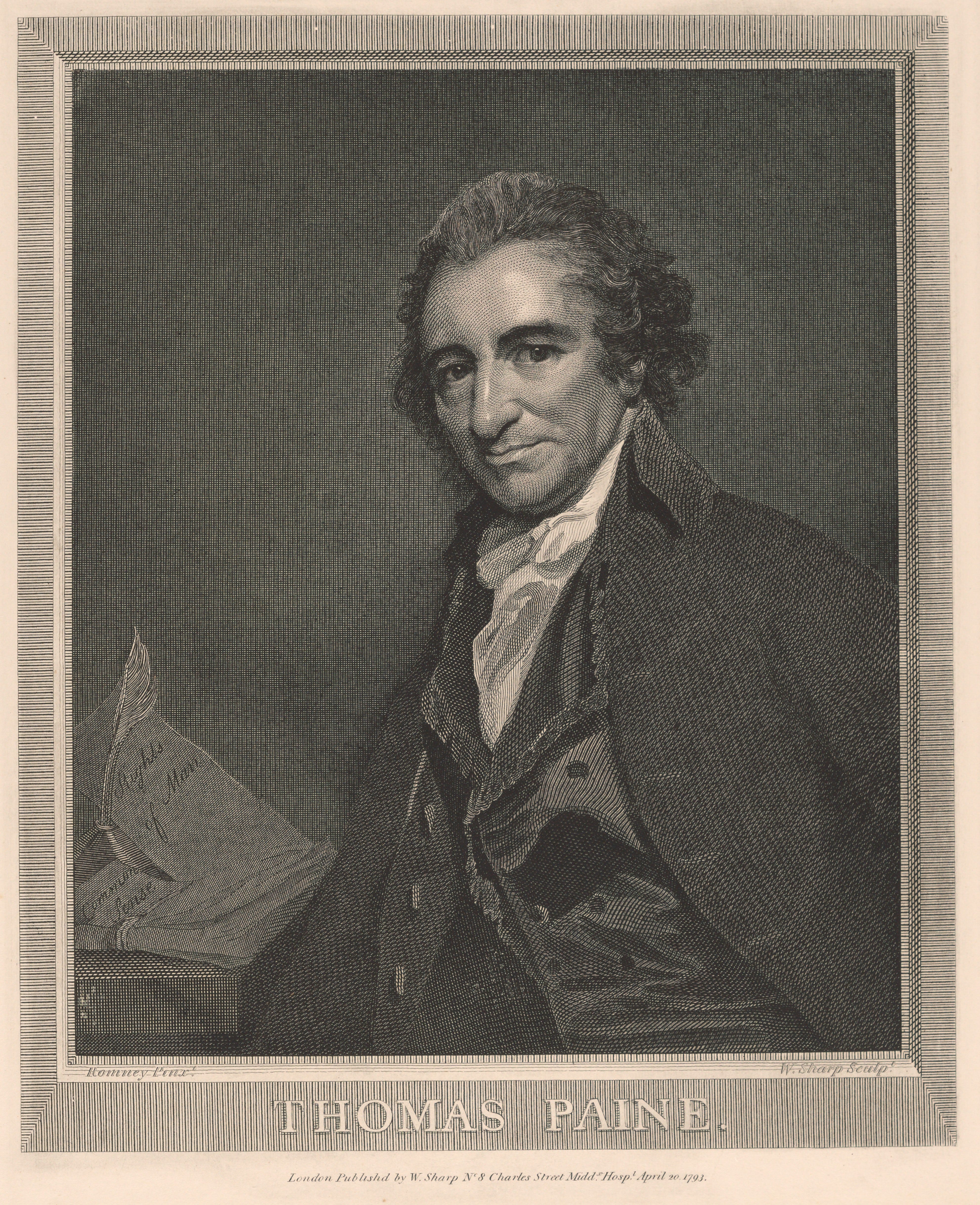
Thomas Paine’s Plea for Perseverance
Paine was a prolific writer, often known for his notable work Common Sense. But most importantly, he was a communicator to the masses. As John Adams would years later recall that the true American Revolution was not one of war, but one that was fought “in the Minds and Hearts of the People,” it was Paine who helped remind the people of the beliefs they now regarded as truth, helping to direct them to live out the truth they claim to profess. 2
To set the stage, it was the second half of the year 1776, and winter was setting in. To say July 4th was the pivotal point of the year would be the honest truth, for the reality of what they now compiled into words would be required to be acted upon in the natural. Part of the actualized American Cause of Liberty saw the deliverance of Boston in March and victory at Charleston in June, what was coming against them weighed greater than what was swinging in their favor. General George Washington had the failures in Canada, the defeats at Long Island, Forts Washington and Fort Lee, the loss of New York and New Jersey, and the capture of General Charles Lee and 5,000 men being taken as prisoners of war by the British all riding on his back. To say it was a low point would be the understatement of the year, with July 4th being known as the peak.
The moral was at its weakest, and desperation beginning to take hold, which is when Paine would publish these much needed words that still hold ever tightly within the soul of America:
“These are the times that try men’s souls: The summer soldier and the sunshine patriot will, in this crisis, shrink from the service of his country; but he that stands it now, deserves the love and thanks of man and woman. Tyranny, like hell, is not easily conquered; yet we have this consolation with us, that the harder the conflict, the more glorious the triumph. What we obtain too cheap, we esteem too lightly: —It is dearness only that gives every thing its value. Heaven knows how to set a proper price upon its goods; and it would be strange indeed, if so celestial an article as FREEDOM should not be highly rated.”
Paine was not calling just for perseverance, but also calling those who were edging near hopelessness for the American cause of Liberty to quote the Apostle Paul to “not be weary in well doing" for the triumph will be glorious, but they must remain faithful and hopeful in affliction.
“I have as little superstition in me as any man living, but my secret opinion has ever been, and still is, that GOD Almighty will not give up a people to military destruction, or leave them unsupportedly to perish, who have so earnestly and so repeatedly sought to avoid the calamities of war by every decent method which wisdom could invent. Neither have I so much of the infidel [unbeliever] in me as to suppose that HE has relinquished the government of the world and given us up to the care of devils; and as I do not, I cannot see on what grounds the king of Britain can look up to heaven for help against us: A common murderer, a highwayman [bandit], or a housebreaker has as good a pretence as he.”
He continued by arguing that the the current cause should not be for the parents’ peace but for the peace of their children, that we must not seek the peace of our time, but seek the peace of our children’s time. If we are to only seek the easy, compromising peace in our time, how can we accurately guarantee or rationally think that it will result in continued sustainable peace for that of our children.
“A noted one, who kept a tavern at Amboy, was standing at his door with as pretty a child in his hand, about eight or nine years old, as most I ever saw, and after speaking his mind as freely as he thought was prudent, finished with this unfatherly expression, “Well! give me peace in my day.” Not a man lives on the Continent but fully believes that a separation must sometime or other finally take place, and a generous parent should have said, “If there must be trouble, let it be in my day, that my child may have peace;” and this single reflection, well applied, is sufficient to awaken every man to duty.” 3
To finish with the words of Paul and the author of Hebrews, we must not get weary in well doing, for we will reap if we faint not. For we must run with perseverance for the race set before us, for our light and momentary affliction will produce a glory that far outweighs them all. 4 How do we not know that the trouble and hardship we face today could lead to a sustainable and profitable peace in the days of those who come after we are long gone?
🏛️ Wisdom Through the Ages
It seems fitting to look at the story of Joseph, who was as a servant and slave in Egypt who was called to be faithful, much like Jesus called us, His followers, to be faithful servants today. The Rev. Matthew Henry:
“He was sold to an officer of Pharaoh, with whom he might get acquainted with public persons and public business, and so be fitted for the preferment for which he was designed. Note, 1. What God intends men for he will be sure, some way or other, to qualify them for. 2. Providence is to be acknowledged in the disposal even of poor servants and in their settlements, and therein may perhaps be working towards something great and important.”
Henry continued:
“Those that can separate us from all our friends, yet cannot deprive us of the gracious presence of our God. When Joseph had none of all his relations with him, he had his God with him, even in the house of the Egyptian. Joseph was separated from his brethren, but not from his God; banished from his father’s house, but the Lord was with him, and this comforted him.” 6
💭 One Thought to Ponder
Though it was used in our first issue, it is a quote that is great to be reminded of often:
“Posterity! You will never know, how much it cost the present Generation, to preserve your Freedom! I hope you will make a good Use of it. If you do not, I shall repent in Heaven, that I ever took half the Pains to preserve it.”
— John Adams writing to wife Abigail Adams, April 26, 1777 7
❓Questions to Consider
Are we willing to endure and persevere hardship in our own time so that those who come after us may inherit something better?
If freedom carries responsibilities as well as privileges, what responsibilities have we been entrusted with—and are we faithfully carrying them?
Thank you for reading Volume 2026 | Issue No. 14 of The Weekly Landing.
If this issue was meaningful to you, consider subscribing and sharing it with others who may benefit from reflections on Scripture, theology, history, philosophy, and the enduring ideas that have shaped Christian civilization and the American Story.
New issues are published every Wednesday.
About The Weekly Landing
The Weekly Landing is a weekly publication of History Landing 1620, dedicated to exploring Scripture, theology, history, philosophy, and the ideas that have shaped Christian civilization and the American Story.
Every issue of The Weekly Landing will always remain free. Supporting subscriptions help sustain this publication and advance the long-term mission of History Landing 1620 through publishing, education, historical preservation, museums, and lifelong learning.
Timeless Wisdom. Faithful Living. A Legacy Worth Leaving.
Recovering the Christian Roots of America.
Published by History Landing 1620
Sources & Citations
1. Scripture
Scripture quotations are from the Holy Bible, New International Version® (NIV®). Copyright © 1973, 1978, 1984, 2011 by Biblica, Inc.® Used by permission. All rights reserved worldwide.
2. Historical Quotation (from John Adams)
3. Historical Quotation (from Thomas Paine)
Thomas Paine. “The American Crisis, No. 1.” December 19, 1776. America in Class: Making the Revolution: America, 1763–1791, National Humanities Center. America in Class — The American Crisis, No. 1
4. Paraphrased and combined from Galatians 6:9, Hebrews 12:1, and 2 Corinthians 4:17.
5. Image
6. Wisdom Through the Ages
Matthew Henry, Matthew Henry’s Commentary on the Whole Bible. Accessed via Bible Hub. https://biblehub.com/commentaries/mhcw/genesis/39.htm
7. Quote
John Adams to Abigail Adams, April 26, 1777. Founders Online, National Archives. https://founders.archives.gov/documents/Adams/04-02-02-0169
© 2026 Tyler Anthony Loiselle. Published by History Landing 1620. All Rights Reserved. Publication scheduled in advance.